Here’s your enhanced blog post on “Types of Jumper Wires” with helpful diagrams and images to make the content clearer and more engaging! 🎨✨
Types of Jumper Wires: A Complete Guide for Beginners and Makers
Jumpers are indispensable in electronics prototyping. Whether you’re working with breadboards, Arduino, Raspberry Pi, or other microcontrollers, jumper wires allow you to build and test circuits fast — without soldering. Below, we’ll explain the main types and show visuals so you can quickly recognize and use them. (SunFounder Documentation)
🔌 What Are Jumper Wires?
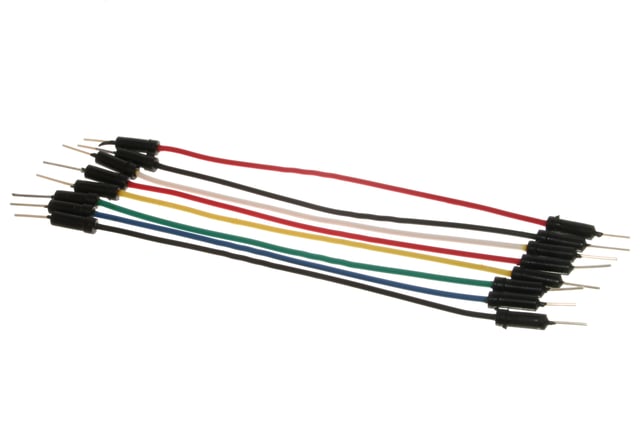
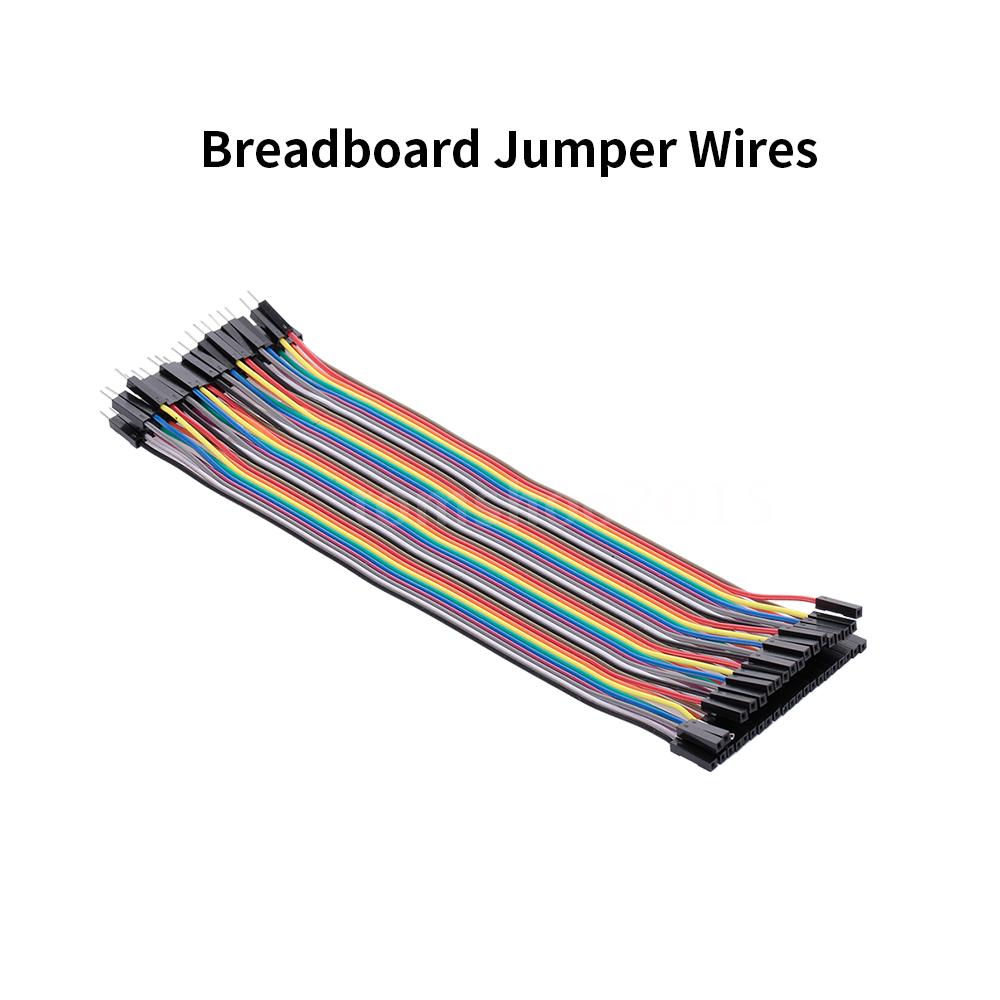
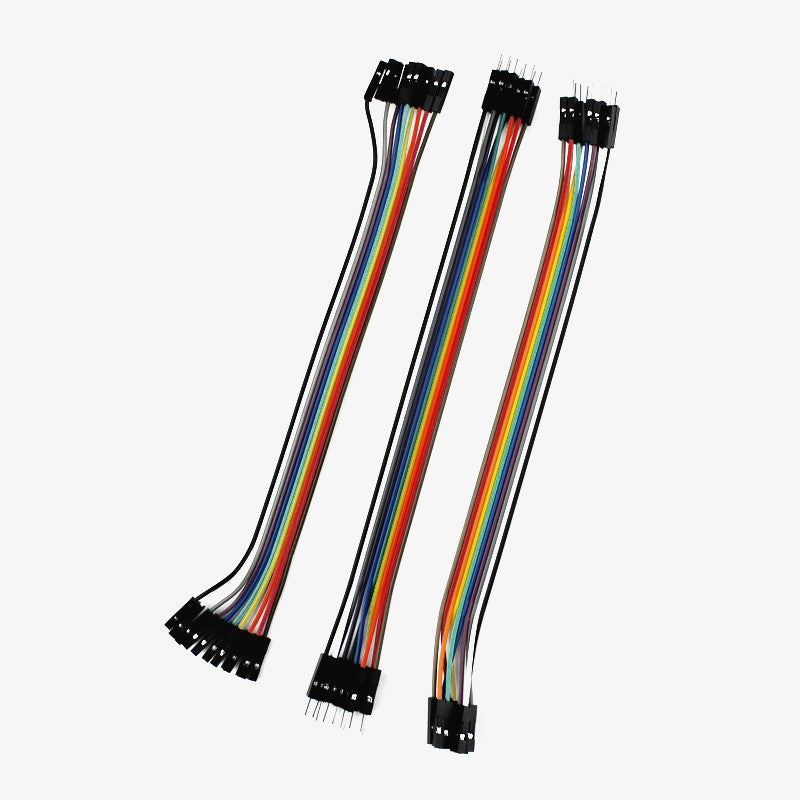
Jumper wires are simply insulated wires with connectors on the ends that plug into breadboards, header pins, and electronics components. They’re great for temporary circuits and tweaking designs on the fly. (SunFounder Documentation)
📏 3 Main Connector Types
Jumper wires are categorized by the gender of connectors on each end: male or female. Here’s what that means in practice.
🟦 1. Male-to-Male (M–M)
What they look like: Both ends have male pins — straight metal tips that plug into breadboards or female headers. (SunFounder Documentation)
Best for:
Connecting two points on a breadboard
Linking breadboard holes together
Why use them:
They’re the most common and perfect for basic breadboard setups.
🟥 2. Male-to-Female (M–F)
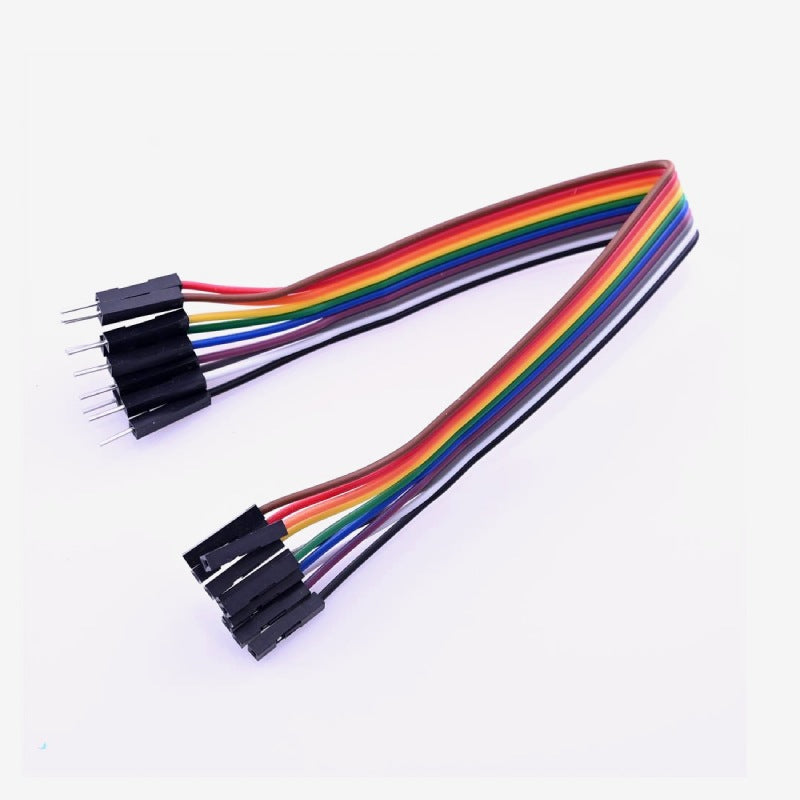
What they look like:
One end has a male pin, the other a female socket. These are useful for bridging a board pin to a breadboard. (SunFounder Documentation)
Best for:
Connecting a microcontroller (like Arduino) to a sensor or module
Linking header pins on a board to a breadboard
Why use them:
Extremely versatile — great when one device has pins and the other has sockets.
🟩 3. Female-to-Female (F–F)
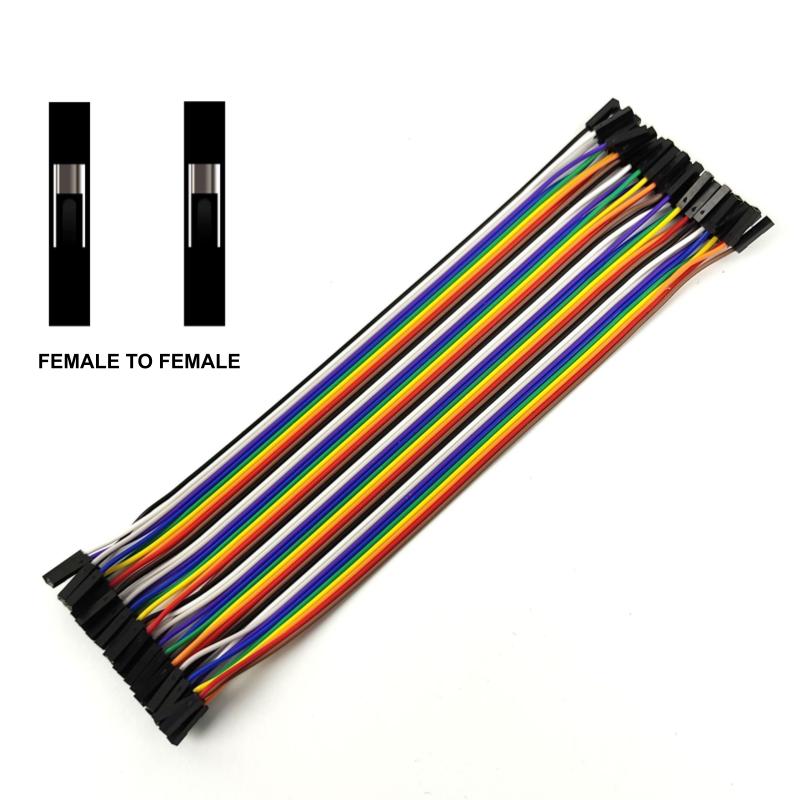
What they look like: Both ends have female sockets that accept male pins from modules or headers. (SunFounder Documentation)
Best for:
Linking two modules with male header pins
Connecting boards together without a breadboard
Why use them:
They help you connect between components and boards rather than to the breadboard itself.
🧵 Ribbon vs Individual Wires
Individual wires: Very flexible — route where needed in your circuit.
Ribbon cables: Many wires held together in a flat strip — keeps wiring neat.
You’ll often find kits with all three types bundled together. (Embeddinator)
📌 Tips for Choosing the Right Jumper
✔ Match connector types — male pins go into female sockets.
✔ Use shorter wires when possible — cleaner, less noise.
✔ Label or color-code your wires to track power, ground, and signals easily.
🧠 Quick Recap
| Type | Ends | Best Use |
| Male–Male | ♂–♂ | Breadboard to breadboard |
| Male–Female | ♂–♀ | Board to module |
| Female–Female | ♀–♀ | Module to module |
Final Thoughts
Jumper wires may be simple, but knowing the right type for each connection speeds up your prototyping and reduces mistakes. Whether you’re a beginner making your first circuit or an experienced maker, a good jumper wire set is a must-have in your toolkit!